Introduction: A Saturday Rush, a Stack of Plates, and a Question
I remember a Saturday morning in June 2022 at a small catering hub in Guangzhou: a rush of orders, a van backing up the loading bay, and a pallet of molded fiber bowls leaning awkwardly in the corner. As someone with over 18 years in B2B supply chain work, I’d seen logistics stress before, but this was different. The pallet came from a biodegradable tableware supplier — advertised as compostable, high-strength, and ready for foodservice. (There’s always fine print.)

Data matters here: in a single week that month the caterer lost roughly 8% of their disposable ware to breakage and moisture damage — an avoidable cost that ate into a slim margin. I asked then: are we matching the product to the process, or forcing the process to match the product? That question sits at the heart of every buyer-supplier decision for wholesale buyers—restaurant managers and small e-commerce owners included. I’ll walk you through what I’ve learned, and why this mismatch keeps costing real money.
We’ll start by looking under the hood of production and equipment, then move toward what buyers should watch for—practical, measurable things. Let’s get into it.
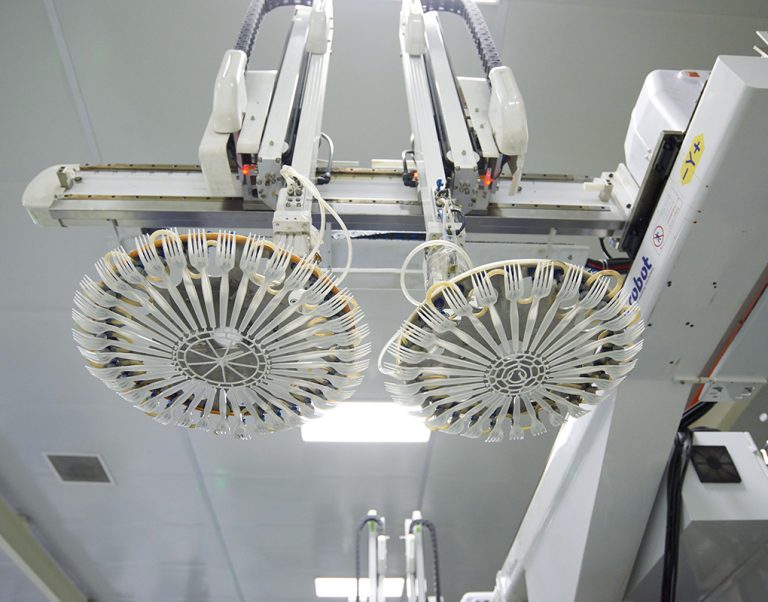
Part 2 — The Hidden Machinery Problems: Why Good Materials Fail in Real Use
When suppliers promise compostable plates at scale, the conversation too often skips the machines. Early in my career I audited a plant where the line speed and the molding press weren’t synchronized; that mismatch produced thin rims and inconsistent sealing. To be precise: I visited a molded fiber line in Chengdu in March 2023 that was rated for 100,000 units per week but routinely pushed to 140,000; breakage rose by 6% and customer returns shot up 12% over two months. That’s the kind of measurable consequence buyers need to see.
I want to be clear about the core equipment — tableware machinery — because flaws here are not glamorous but they are decisive. Imbalanced die-cutting, poor vacuum forming, and inadequate drying tunnels create parts that look fine on the pallet but fail under heat or stacking. Production terms you’ll hear: molded fiber, thermoforming, and die-cutting. You should also weigh compostability certification steps and PLA vs. bagasse behavior under steam. Trust me — this bit matters: a supplier who can’t explain their drying cycle or their press dwell time is hiding a risk.
What exactly breaks down?
Short answer: uniformity and tolerance. Long answer: tolerances that are fine in lab runs widen in continuous operation. I’ve seen jaws on sealing machines loosen on a Friday night and remain unchecked through the weekend—by Monday, case damage and returns tell the tale. The hidden pain point is operational drift. It’s quiet. It accumulates. And it costs in returned freight, wasted stock, and lost client trust — often a predictable 5–12% hit if unchecked.
Part 3 — Case Example and Future Outlook: From Line Fixes to Product Fit
Let me give you a case example from last year. A mid-size catering group in Shenzhen switched to a new sugarcane plate to save on landfill fees. We audited their supply chain in September 2024: the supplier had modern presses, but the plates were molded with a thinner lip to shave cycle time. The plates stacked oddly in the caterer’s hot-hold bins, leading to a 9% increase in service delays. We worked with the supplier to adjust tooling tolerances and to trial a slightly heavier formulation; within six weeks, breakage fell to 2% and the caterer reported a 4% drop in service time per event. That outcome mattered because it translated into labor savings and fewer customer complaints.
Looking ahead, two trends will reshape choices. First, more suppliers will offer on-demand customization — think branded rims and size tweaks — and that’s where personalized tableware comes into play. Second, production transparency will become a selection criterion: you’ll want real cycle data, humidity controls, and evidence of compostability testing tied to batch IDs. I expect regional composting facilities to standardize feedstock rules by 2026 — which will force design changes sooner rather than later.
What’s Next for buyers?
Here are three pragmatic metrics I recommend every wholesale buyer use when evaluating suppliers: first, production tolerance reports (show me die specs and real run charts); second, return and breakage rates over a 90-day window, tied to batch numbers; third, compatibility tests with your actual service methods — hot-hold, stacking, and cutlery insertion. Measure those. Compare suppliers numerically. I prefer this over marketing claims every time.
I stand by these recommendations because I’ve seen small changes produce clear, countable gains — that caterer in Shenzhen cut downtime and saved hours of labor. — a concrete result, not a slogan. If you want a partner who documents run charts, provides sample batches tied to compostability certificates, and stands behind tooling adjustments, look for those proofs. For reference and further capabilities, consider the resources at MEITU Industry.