Why a comparative lens best serves the asset manager
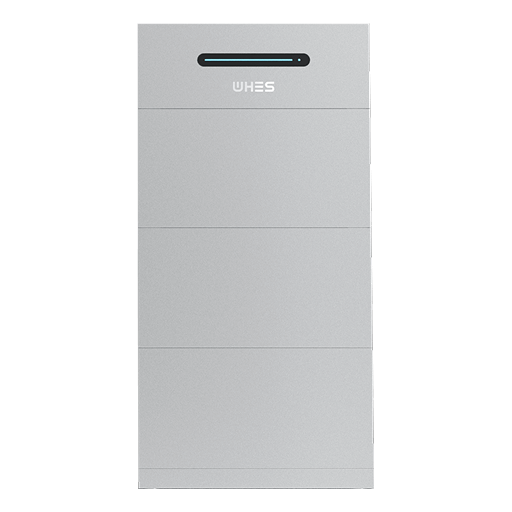
In an age where distributed energy resources contend with wholesale markets and retail tariffs, a comparative approach to merchant revenue stacking proves indispensable. One must weigh strategies side by side: market participation, demand-charge mitigation, and resilience provisioning. For practitioners concerned with practical deployment, the discussion begins with the home energy storage system that underpins operational flexibility — and thus the capacity to harvest multiple revenue streams concurrently.
Core merchant revenue streams to measure
Asset managers typically consider three principal value streams. First, energy arbitrage: buy low, discharge high across time-of-use periods. Second, capacity and ancillary services: frequency regulation, spinning reserve, or firm capacity obligations. Third, local services: demand charge reduction and peak shaving for commercial hosts. Each stream calls for distinct control logic, and each impacts lifecycle economics differently when one factors cycle life, depth of discharge (DoD), and inverter sizing.
Comparing fixed and flexible 10 kWh containers
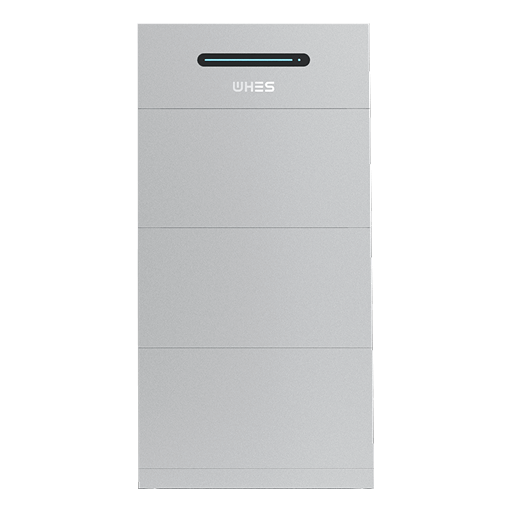
Ten-kilowatt-hour modules are a convenient unit of analysis. Fixed deployments—hardwired to a single host and tariff—deliver predictable demand-charge savings. Flexible 10 kWh containers, by contrast, may be redeployed or aggregated virtually to join wholesale markets. The trade-offs are thus clear: fixed systems simplify operations and reduce interconnection complexity; flexible containers increase optionality and market access but raise orchestration costs and logistics. Consider the marginal benefit of aggregation versus the marginal cost of mobility when modelling payback periods.
Software orchestration and market access
Optimal stacking requires a control stack capable of real-time adjudication between competing signals: market bids, local load, and reserve targets. Energy management systems (EMS) that support bidirectional telemetry and automated bidding will outperform manual strategies. Beware of latency and settlement differences between markets — these manifest as real revenue drag if your EMS mis-schedules a discharge during a baseload period. — In practice, integration with market operators and fast telemetry are non-negotiable for merchant strategies.
Operational considerations: interconnection, maintenance, and warranties
Interconnection timelines and grid-operator rules shape the feasible strategies. A container that can be registered for frequency regulation in one jurisdiction may require additional certification elsewhere; thus geography matters. Maintenance regimes influence availability and net revenue: planned downtime reduces hours available for arbitrage and ancillary income. Finally, warranty terms—cycle-based versus time-based—alter long-run cost assumptions. Practical modelling must fold these operational constraints into revenue forecasts.
Real-world anchor: lessons from grid events
Historical incidents furnish instructive anchors. The February 2021 Texas grid emergency and the repeated public-safety power shutoffs in California revealed that battery assets serve both merchant aims and resilience functions. Utilities and asset managers observed that systems sized and dispatched for merchant markets nonetheless provided critical backup during outages. These occurrences underscore a dual-value proposition: merchant stacking need not preclude resilience, provided dispatch logic respects contractual and safety constraints.
Comparative economics: how to model and validate outcomes
To compare strategies, run scenario analyses that vary three parameters: market price dispersion, number of available revenue windows per day, and degradation rates tied to cycle depth. Monte Carlo or stress testing is helpful to reveal downside risk. Validate models with field trials that mirror operational constraints — for instance, test a 10 kWh container across a week of high volatility. Such trials expose hidden friction: ramp-rate limits at the inverter, minimum state-of-charge requirements, and settlement timing mismatches.
Common mistakes and pragmatic mitigations
Practitioners often err by assuming perfect market access, underestimating balance-of-system costs, or ignoring host-asset contractual restrictions. A recurrent oversight is the absence of a robust telemetry and control agreement with the host site—this yields scheduling conflicts. Mitigations are straightforward: secure clear interconnection and telemetry terms, budget for BOS and transport when containers are mobile, and incorporate conservative degradation assumptions into financial models. — These steps tighten forecasts and reduce unpleasant surprises.
When residential battery storage augments merchant stacks
Residential deployments can bolster aggregated merchant strategies through virtual aggregation and behind-the-meter demand response. Aggregated 10 kWh units, when coordinated by an aggregator, can participate in wholesale or ancillary markets while still delivering local value to hosts. The key is policy and market design: some regions permit aggregation for settlement, others do not. Thus, a comparative review must include regulatory feasibility and compensation rules when evaluating residential battery storage as a component of a merchant stack.
Three golden rules for evaluating revenue-stacking strategies
1) Prioritize flexibility metrics: measure how quickly and at what scale a system can reassign energy from local deferral to market bids. 2) Stress-test degradation: model revenues under conservative cycle-life and DoD assumptions to avoid overoptimistic returns. 3) Validate market access: ensure contractual and telemetry arrangements permit the desired market participation without prohibitive latency or settlement constraints.
Apply these rules and one finds the path from conceptual strategy to deployed, revenue-generating arrays grows markedly clearer. In the end, the most durable solutions combine modular 10 kWh hardware, sophisticated EMS, and pragmatic operational contracts — all of which is the sort of integrated value WHES brings to the field. WHES. —