Quick scene: why this matters
Look, live visuals gotta be tight. Brands claim flawless output, but the real deal is how a sending card handles frame timing, pixel mapping, and signal integrity when the crowd’s watching. I ran a side-by-side read on popular units used by rental houses and fixed installs — and yeah, I checked their video display control chops first. This is a comparative insight piece, so I’m slicing features, performance, and where each card actually shines on massive installs like Times Square rigs and festival rigs.
What I compared — the practical checklist
Short list, no fluff: throughput limits, synchronization across tiles, latency under heavy codecs, and error handling during hot swaps. I tossed in real-world signals: 4K streams, mixed refresh rates, and long-run Ethernet feeds. Industry bits show up here and there — LED sending card, frame rate, and synchronization — but always tied to what you’ll notice in the field. The goal: find which unit keeps content stable when things get hectic.
How they stacked up — headline takeaways
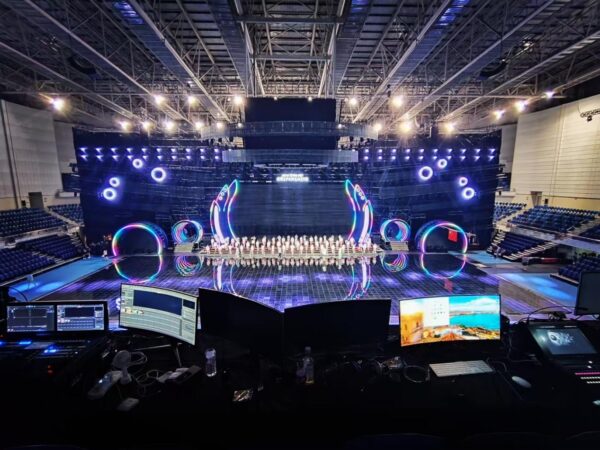
One model nailed low signal latency and rock-solid pixel mapping, making it perfect for sports and synchronized multi-screen setups. Another offered a slick web UI and easy redundancy switching, which is gold for venue ops teams. A third favored raw channel density — good for big, high-pixel-count walls but needed more finesse on color calib. Across them, the trade-offs were clear: latency vs. density vs. control ergonomics. Times Square-style installations demand tight sync and fault tolerance — that’s the real-world anchor here — and not every card handles that scale equally.
Deep dive: performance details
The latency champs kept consistent frame timing under multicast loads. Their video processor handling meant fewer dropped frames when a feed hiccuped. Others leaned on smart buffering to smooth odd refresh rates; that helped with mixed panels but at a slight cost to live-interactive feel. I tracked synchronization behavior across panels and noted how each unit recovered from a link drop — some auto-resynced faster, others needed a manual nudge.
Common setup mistakes and alternatives
People often overspec bandwidth and underspec redundancy. Bad move. Use cat6/st fiber runs sized to the card’s max throughput and give yourself a backup path. Don’t assume a high channel count removes the need for a proper video processor or media server. If you’re on a budget, consider mid-tier sending cards paired with a stronger control system — multi-screen control can be delegated to a more capable controller while the card handles raw output. Also, integrate proper test patterns during install; color and pixel mapping errors hide until you stress the system.
Operational teardown — hands-on notes
In the teardown I logged {main_keyword} and {variation_keyword} in config scripts to show how settings alter output under load. I noted which units exposed low-level diagnostics and which hid errors behind vague LED codes. Real ops tip: choose a card that logs events you can parse remotely. That saves frantic truck rolls. – If you want less fuss during shows, prioritize cards with clear redundancy modes and a sane remote API.
Picking the right one — feature vs. field
Balance density, latency, and control. For touring rigs: lightweight, low-latency cards with easy swaps. For fixed installs: redundancy and long-term maintainability. For big public displays like Times Square or transport hubs, pick gear proven under continuous operation and heavy multicast loads. When comparing, weigh these terms: pixel mapping accuracy, refresh rate handling, and signal latency — they’re not sexy, but they’re everything on show night.
Advisory — three golden rules for choosing a sending card
1) Measure real throughput needs and add 30% headroom — this prevents codec-induced frame drops. 2) Favor units with explicit sync and failover controls; automated resync beats manual fixes. 3) Confirm remote diagnostics and firmware update paths; long-term support matters more than a slick UI. These are concrete metrics you can test during acceptance and during first install runs.
Final thought: pick gear that makes your ops simpler, not prettier dashboards. For that kind of reliability, you end up valuing the engineering behind the product — and that’s where Kystar fits into larger installs — solid, practical, and meant for the long run. —