Introduction: A Short Shop Story, Some Numbers, One Big Question
I was in a small metal shop last spring watching a tech tighten a laser head while a hazy smell hung in the air — he shrugged and said, “We always open a window.” The debate over a proper laser fume extractor comes up in places like that all the time, and the numbers show why: poor extraction can raise particulate counts by tens to hundreds of PPM within minutes, and weld or cut cycles only amplify the risk. So how do you choose gear that actually keeps people safe and production steady — without overpaying or installing the wrong system? (Yes, I know the options look overwhelming.) Let’s walk through what usually goes wrong and what to check next.
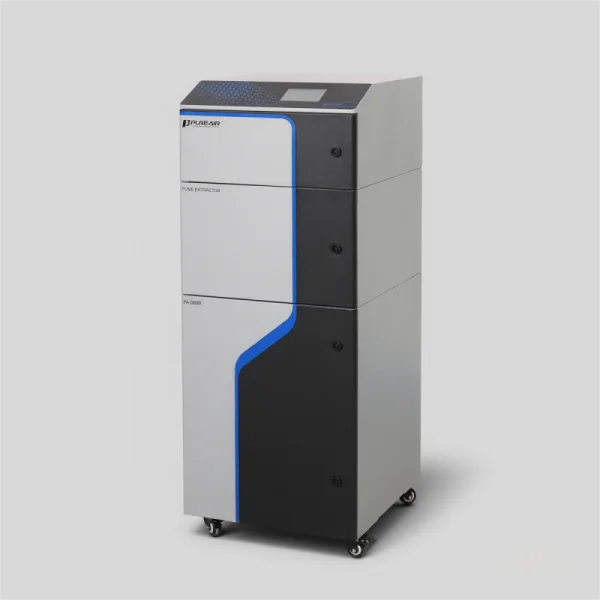
Why Common Fixes Miss the Mark — a Technical Look
What goes wrong with “standard” setups?
When teams consider a CO2 laser fume extractor, they often pick based on price or a single spec sheet number. I’ve seen it: a shop buys a cheap unit with a small blower motor and expects it to handle heavy duty cutting. That misread leads to clogged filters, higher backpressure, and poor capture at the laser head. In practice, extraction airflow and filter media matter more than sticker price. HEPA filter stages and activated carbon are not optional add-ons if you cut plastics or painted materials — they change the outcome. Also, sensors like PPM sensors or basic tachometry are useful, but only when integrated into a system that balances airflow and pressure.
Look, it’s simpler than you think: capture happens at the source. If the hood or ducting geometry is wrong, no fancy filter will save you. I’ve audited plants where duct bends and undersized hoses reduced effective suction by half — yes, half. That raises particle recirculation and shortens filter life. Other flaws? Overreliance on simple room ventilation, ignoring maintenance cadence, and under-spec blowers. These failures combine: more downtime, unpredictable emissions, and staff who avoid the machine (— funny how that works, right?).
Principles for Better Systems — New Technology, Clear Criteria
What’s Next: Principles, Not Promises
Moving forward, choose systems built around a few core principles. First: source capture. A properly tuned CO2 laser fume extractor must match extraction airflow to the laser’s duty cycle and the geometry of the laser head. Second: staged filtration. Combine pre-filters, HEPA, and activated carbon or electrostatic precipitator stages when needed. Third: maintenance-friendly design — filters that are easy to swap, accessible blower motors, and clear service logs. I prefer systems that provide simple diagnostics rather than cryptic error codes; real teams need actionable feedback.
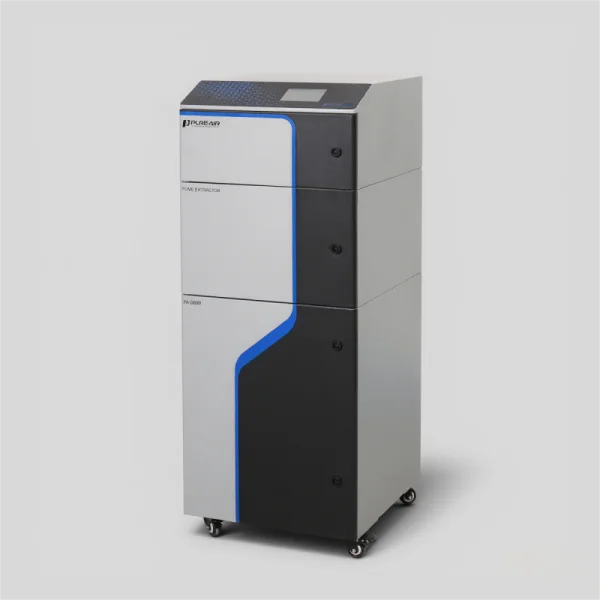
Technologies like adjustable variable-speed drives, brushless blowers, and smarter PPM sensors help. They let you dial in suction for jobs and save energy during idle periods. Also, consider modular ducting and quick-connect interfaces so you can reconfigure cells without a full HVAC overhaul. These steps cut operating cost, reduce downtime, and extend filter life. The payoff shows up in lower consumable spend and happier operators — and yes, less arguing about open windows.
Practical Takeaways and Three Metrics You Can Use
I’ve worked with shops that replaced one-size-fits-all units and saw immediate gains. To evaluate systems, focus on three clear metrics: capture efficiency at the laser head (measured at the nozzle or hood), clean air delivery rate (CADR) adjusted for real duty cycles, and total cost of ownership (TCO) over filter life plus energy. Measure those, and you separate marketing from reality. Also watch for build quality — rugged ducting and a reliable blower motor beat fancy screens every time. Keep an eye on maintenance access; if it’s a hassle, it won’t get done.
In short: prioritize capture-first design, staged filtration, and maintainability. Test units under real workloads if you can. And remember — people matter. If operators trust the system, they will use it correctly, and that alone prevents many issues. For practical options and real-world support, check trusted providers like PURE-AIR.