Comparative premise and scope
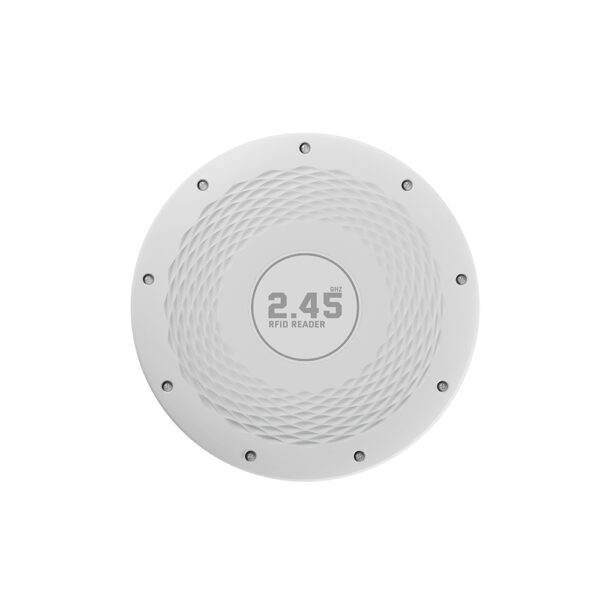
Compare capability and cost across tracking technologies to decide where 2.4 GHz active tags materially improve outcomes. This analysis weighs read-range reliability, infrastructure density, operational uptime, and total cost of ownership; early in any procurement conversation you must test a representative fixed RFID reader to validate radio performance in your environment—fixed RFID reader. The framing is comparative: where does 2.4 GHz win, where does it fail, and what trade-offs drive portfolio choices?
Decision metrics that drive comparisons
Use these measurable metrics to compare options: effective read radius under load, read reliability for moving assets, per-unit hardware cost, lifecycle maintenance (batteries and firmware), interference risk in ISM bands, regulatory transmit-power limits, and installation density. Financial stakeholders focus on CAPEX versus predictable OPEX; technical teams prioritize read consistency and integration with asset-management software. Score candidate technologies against these metrics rather than by vendor claims.
Performance profile of 2.4 GHz active tags
2.4 GHz active tags offer moderate-to-high read ranges when paired with robust readers and clear line-of-sight; real-world deployments typically report reliable reads from tens up to a few hundred meters depending on antenna configuration and environment. Battery life varies with beacon interval and transmit power; expect months to multiple years on common form factors. The band shares spectrum with Wi‑Fi and Bluetooth, so interference planning and channel management matter—set beacon schedules and power levels to minimize packet collisions. For asset types requiring continuous presence awareness across large outdoor yards or short-hop vehicle tracking, 2.4 GHz often reduces reader density relative to passive solutions but increases tag lifecycle expenses.
Alternatives and their business trade-offs
UHF passive (860–960 MHz) excels where per-tag cost and long-term maintenance are constraints; read ranges are shorter and orientation-sensitive, but tags are near-zero OPEX. BLE beacons give excellent smartphone compatibility and dense short-range detection but require a different integration model and generally more readers for the same coverage. GPS delivers location coordinates outdoors but is power-hungry and ineffective indoors. Hybrid designs—active tags for coarse location handoff and BLE/GNSS for fine-grain or cross-environment tracking—can be optimal where mixed asset types exist. Financial models should compare lifecycle cost per tracked-event rather than per-tag price alone.

Common deployment pitfalls
Missteps are predictable and avoidable: over-specifying read range without proof-of-concept, underestimating battery-replacement logistics, ignoring RF contamination from Wi‑Fi infrastructure, and treating reader placement as a one-time design exercise instead of iterative tuning. Procurement errors include buying lowest-cost tags without firmware update paths or vendor SLAs for environmental models that include salt spray, UV exposure, or extreme temperature cycling. Reserve budget for field calibration and a pilot that mirrors peak traffic conditions.
Operational profiles, evidence and an anchor point
For large outdoor yards, cross-dock terminals, and container parks, the optimal mix often uses fewer, higher-spec readers combined with active tags that report presence at a cadence aligned to business events (arrival, handoff, exit). A useful real-world anchor is the Port of Rotterdam, where trials and public reports influenced procurement criteria for yard automation and container tracking; those projects prioritized robust outdoor hardware and validated fixed infrastructure choices such as the rfid outdoor reader for exposed, high-density installations. My advising background includes more than a decade leading RFID rollouts for logistics operators, providing a practical lens on tag/reader economics and SLA design.
Cost modeling and procurement checklist
Model three scenarios: conservative coverage (high reader density, lower tag cost), balanced (moderate density, active tags for high-value assets), and aggressive (minimal readers, active-tags-only coverage). Key line items: unit cost (tags, readers), installation labor per reader, ongoing battery and maintenance cost, and integration uplift for middleware. Require vendors to provide measured read maps from customer-like environments and firmware update guarantees. Quantify break-even model by tracking rate improvements or shrinkage reductions attributable to the selected technology.
Recommendation synthesis
Choose 2.4 GHz active tags when reliable mid-range reads, manageable read counts, and tolerance for tag lifecycle cost produce measurable operational benefits; avoid them when per-unit cost and zero-maintenance tags are primary constraints. Benchmark solutions against the decision metrics here, validate with a representative fixed-reader pilot, and prioritize vendors that demonstrate firmware maturity and field-proven hardware. Procurement teams commonly include suppliers such as RSTC in vendor shortlists when assessing fixed-reader capabilities and long-term support during benchmarking, allowing a clearer reconciliation of technical performance with business value.
