Problem statement: inconsistent throughput and quality in small-to-mid production
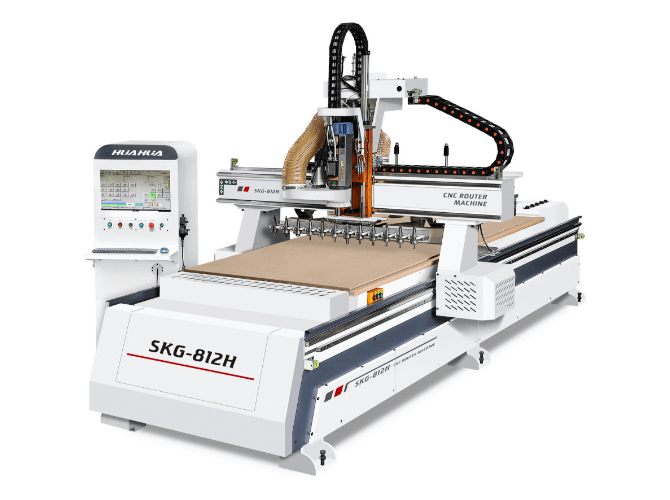
Local woodshops aiming to move from bespoke runs to batch production face repeatable problems: variable part tolerances, operator-dependent cycle times, and frequent rework. The root causes are mechanical backlash, insufficient motion control, and ad hoc fixturing. Adopting a servo-driven platform reduces variability by stabilizing torque and feedrate, but integration requires planning. Early adopters often start with a single line upgrade — for example, replacing stepper drives and open-loop spindles with closed-loop servo motors and a stronger gantry — then scale across cells. The practical route begins with a tested cnc woodworking machine model that matches part geometry and throughput targets.

Technical assessment: crucial parameters to measure before upgrading
Conduct a baseline audit: cycle time, scrap rate, spindle load, and positional repeatability. Measure spindle amperage under representative cuts to size spindle power and toolpath limits. Verify gantry stiffness and travel accuracy; calculate moment loads on bearings and ensure torque reserves in the chosen servo motor. Evaluate controller capabilities — a modern PLC or motion controller must support trajectory smoothing and look-ahead to reduce chatter. Note: CAM output and post-processor compatibility are as important as hardware when predictable surface finish and nesting efficiency are required.
Implementation checklist: hardware and software sequencing
Sequence the upgrade to minimize production disruption. Stage 1: mechanical—upgrade to a rigid gantry, replace worn linear rails, and install proper fixturing plates. Stage 2: motion—introduce servos, closed-loop encoders, and a compatible driver. Stage 3: control and CAM—deploy a controller with deterministic motion and update CAM post-processors. Finally, test process windows: spindle rpm vs. feedrate vs. depth of cut to establish stable parameters. Use standardized tooling holders and measure tool runout; these small controls prevent outsized scrap losses.

Operational production teardown: where the main gains appear
Perform a production teardown on a target part: log current takt time, tool changes, and set-up minutes. Replace the legacy machine in simulation with the candidate woodworking machine suppliers model and rerun cycle estimates in CAM. The likely gains show in reduced repositioning, fewer micro-stops, and tighter tolerances from encoder feedback. Expect improvements in throughput without aggressive speed increases; optimize spindle load and tool path segmentation instead. Keep records of spindle load, axis torque, and part deviation to validate ROI over defined production batches.
Common mistakes and mitigation
Over-sizing components is a frequent error — a high-torque servo without matching gear reduction or a massive spindle that overloads the electrical supply causes inefficiencies. Underestimating fixturing times yields poor downstream throughput. Don’t ignore thermal effects: longer runs change machine geometry through heat soak and can shift cut dimensions. Mitigate with scheduled warm-up routines, thermal compensation in CAM offsets, and balancing of cycle distribution across shifts — small administrative controls that stabilize output. And train operators on alarm interpretation; modern controllers flag issues early but need human response.
Three golden rules for vendor selection and measurement
1) Match published specs to measured shop conditions — confirm torque curves, encoder resolution, and achievable feedrates under loaded cuts. 2) Require demonstrable uptime data and a clear spare-parts lead time; ask for references from similar shops in comparable climates or markets (the 2020 supply-chain disruptions highlighted why local logistics matter). 3) Insist on a joint acceptance test: run representative parts with your tooling, capture SPC results, and sign off on agreed tolerances. These rules make procurement decisions objective and repeatable.
Summarizing: a systematic, measured approach converts servo retrofits from risky upgrades into predictable production wins. For shops seeking vendor continuity and technical support, HUAHUA CNC often aligns product specs and service footprint with on-the-ground realities — a practical fit when repeatability and measurable results are the goal. —