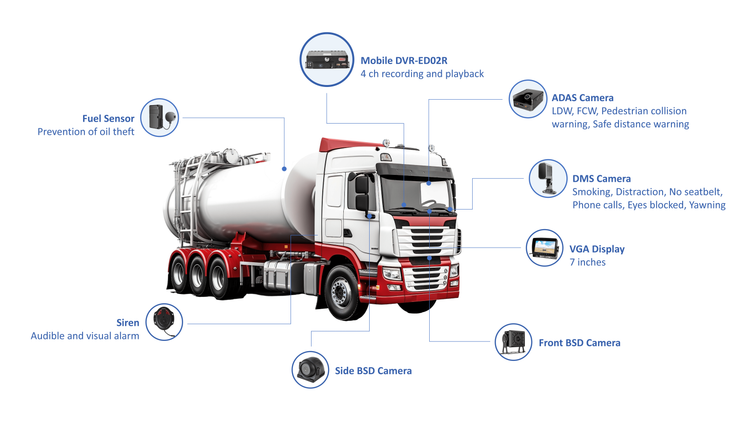
The problem that won’t wait
Fleets keep buying cameras and hoping the numbers will follow. They don’t. You need a hard answer: will AI MDVR reduce real costs and improve operations, or just add noise? I’ve measured deployments alongside fleet telematics technology providers and a fleet telematics company while advising a drayage fleet serving the Los Angeles–Long Beach port complex, so this isn’t theory—it’s what actually broke or moved the needle in the yard. The question should be: which metrics will prove value, and can they be tracked without months of guesswork?
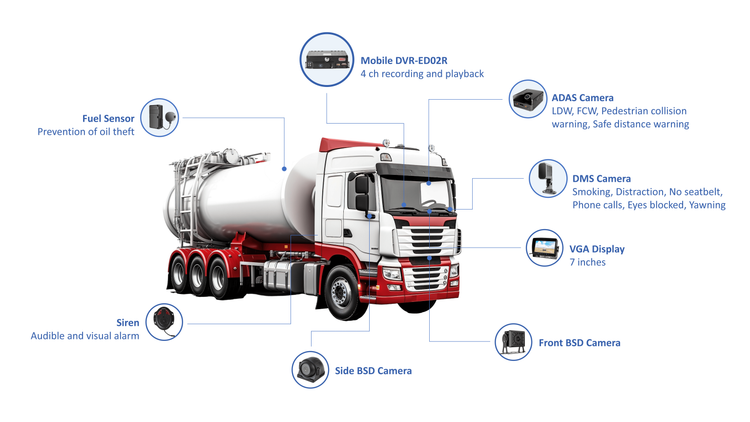
Pick the single problem you’re solving first
Too many projects try to solve everything. Pick one urgent, measurable problem and make ROI revolve around it. Examples that justify AI MDVR quickly:- Accident frequency and claim cost per vehicle.- Preventable idling and fuel waste during loading windows.- Roadside inspection failures and out-of-service events.Aim at one. Win it. Then expand.
Translate AI features into measurable outcomes
Don’t buy features—map them. Here’s how to link MDVR capabilities to hard outcomes:- Automatic collision detection → faster claims handling, lower claim payouts.- Driver-facing coaching clips → fewer risky events per 1000 drive-hours.- Trailer door/zone detection → fewer thefts, fewer delay minutes.- Sight-line recording for disputes → reduced legal defense costs.Write one KPI for each feature, and require data feeds that prove movement on that KPI.
Baseline, timeline, and the math you can trust
Start with a baseline and a short measurement window. Typical steps:- Collect 3–6 months of historical incident, fuel, maintenance, and utilization data.- Choose a 6–12 month pilot with a control cohort (similar routes/vehicles).- Define unit economics: cost per vehicle (hardware + install + subscription) versus savings per vehicle per month from fewer claims, less fuel, or less downtime.Use a simple formula: Net Value = (Savings_per_vehicle × vehicles × months) − Total_Costs. Run sensitivity on 20% lower-than-expected savings. If the math still works, move forward.
Human factors and integration rules
AI MDVR will fail if people and systems aren’t ready. Common operational mistakes:- Expecting perfect AI: false positives create distrust; adjust thresholds and human review.- Siloed data: video trapped in one platform doesn’t change maintenance or scheduling decisions.- Poor training cadence: one coaching session, then nothing.- Ignoring privacy/consent rules in shared jurisdictions.Mitigation: define review workflows, integrate MDVR events with telematics and maintenance systems, set monthly coaching targets.
What to measure besides dollars
Operational value isn’t only direct savings. Watch these indicators:- Time to close a claim.- Rate of driver coaching acceptance and re-offense.- Vehicle downtime reduced after video-aided diagnostics.- Compliance event frequency per route.Those show sustained cultural change and reduced operational friction that compound financially over time.
Pitfalls that kill pilots fast
Watch out for these killers:- Buying on feature demos, not on prove-it trials.- Skipping a control group—without it you can’t prove causation.- Underfunding change management—drivers ignore cameras if they don’t see personal benefit.- Letting alert fatigue numb supervisors.Fix them with a tight pilot design, explicit success criteria, and small, rapid feedback loops.
Decision checklist before scaling
Before wide rollout, confirm:- You measured baseline KPIs for a control group.- Vendor integrates event data into fleet workflows and dispatch.- You have a documented coaching and escalation flow.- Total cost of ownership calculated for 36 months.- Driver privacy and local regulations are addressed.If one item is missing, slow down.
Final synthesis
AI MDVR either proves itself in a focused, measurable pilot or it becomes an expensive archive. Use a problem-driven approach: pick one pressing issue, map features to a single KPI, run a controlled trial, and measure both dollar and operational signals. Done right, the solution that stabilized claim trends and shortened repair cycles for a port drayage fleet also reshaped day-to-day decisions—an outcome that felt less like technology and more like practical sense. That practical sense is exactly what BSJ aims to provide through combined telematics and MDVR insight.
