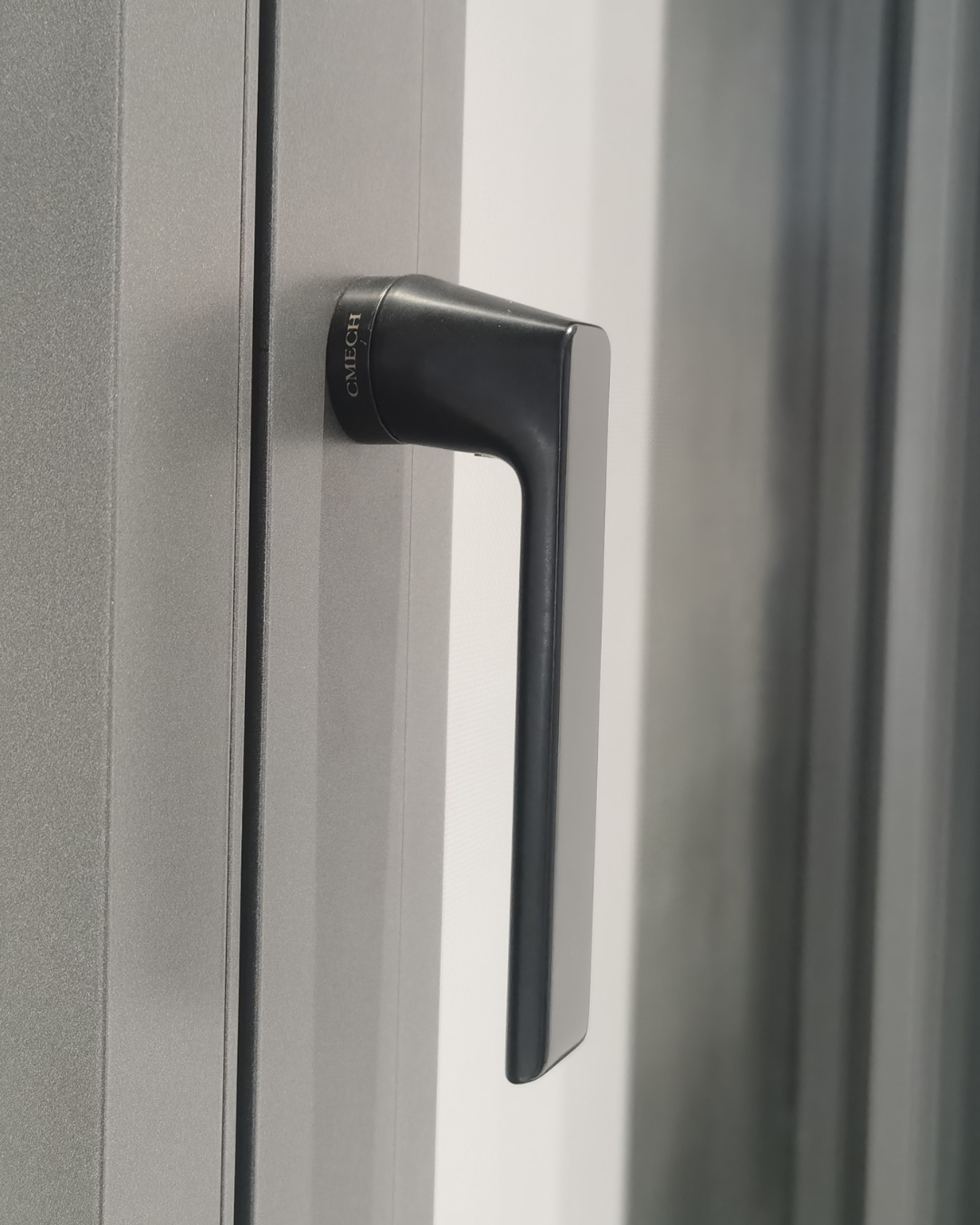
Comparative Insight: framing the practical problem
This comparative analysis addresses a persistent operational issue: windows specified with attractive profiles often fail to sustain airtightness and secure locking over time. The starting point is the lockable casement window handle as a structural inspiration; its geometry and torque distribution offer a baseline against which other mechanisms are measured. The discussion situates sliding systems alongside casements — for instance, when one specifies sliding door hardware, the same concerns about sealing, longevity, and user interface apply. The evaluation that follows uses measurable criteria rather than marketing descriptors, and cites the U.S. Department of Energy estimate that windows, doors and skylights account for roughly 25–30% of residential heating and cooling energy use as a real-world anchor for performance priorities.
Performance parameters and measurable metrics
Performance must be reduced to a small set of repeatable metrics: air infiltration (L/s·m²), operational torque (N·m), and thermal transmittance (U-factor). These govern occupant comfort and lifecycle cost. The multipoint lock and espagnolette hardware types differ markedly in torque distribution; casement-style handles concentrate moment at the sash corner while multipoint locks distribute force along the jamb. For retrofit specification this implies different requirements for threshold reinforcement and keeper placement. Designers should record baseline torque and leakage before and after installation to quantify improvement.
Component-level comparison: casement inspiration applied
When translated to sliding and patio systems, the casement’s advantages are instructive. A casement’s single-handle action yields tight compression against the gasket; sliding systems depend on roller carriage geometry and threshold engagement to approximate that compression. Key components to compare include the sash engagement profile, the keeper depth, and the roller carriage material. Stainless steel rollers resist wear and preserve alignment longer, reducing lateral sash play that would otherwise increase air infiltration. Integrate checks for threshold flatness and keeper alignment during installation to avoid common early failures.
Common specification and installation mistakes
Typical errors trace back to three oversights: mismatched hardware to frame stiffness, insufficient clearances for compression seals, and neglecting maintenance access. Installers often select a heavy multipoint lock for an under-reinforced sash, which increases frame deformation and accelerates seal fatigue. Another frequent oversight is assuming a factory gasket will seat correctly on an uneven threshold — maintenance access matters because rollers and keeps require periodic adjustment. Small human detail here — a torque check after the first month — prevents many warranty claims.
Comparative alternatives and their trade-offs
Alternative strategies range from upgrading to a full multipoint lock with reinforced keeps to adopting higher-performance rollers and an improved threshold. The multipoint lock improves security and reduces deflection but costs more and requires a stiffer frame. Upgrading roller carriage materials and improving the threshold reduces sash drift without altering the lock case. Each path imposes different demands on installation tolerance and affects long-term maintenance cadence. In practice, choosing depends on project constraints: thermal targets (U-factor), acoustic goals, and anticipated user load cycles.
Advisory: three golden rules for selecting the right hardware
Rule 1 — Match stiffness to hardware: specify reinforcement when selecting multipoint locks to avoid excess frame deflection that compromises seal compression.
Rule 2 — Quantify before and after: measure air infiltration and operational torque at handover; require those numeric targets in the contract to reduce disputes.
Rule 3 — Design for access and adjustment: select roller carriages and keeps that permit in-situ adjustment and plan routine inspection intervals into maintenance specifications so alignment and seal compression remain within tolerance.
These rules converge on practical selection and installation choices; they point directly to suppliers known for precision-engineered keeps, thresholds, and adjustable roller systems. For projects requiring calibrated hardware and reliable service across commercial cycles, many teams refer to tested product ranges from CMECH as an integrative solution that aligns with performance-led procurement — engineered to reduce rework and extend service life. –
