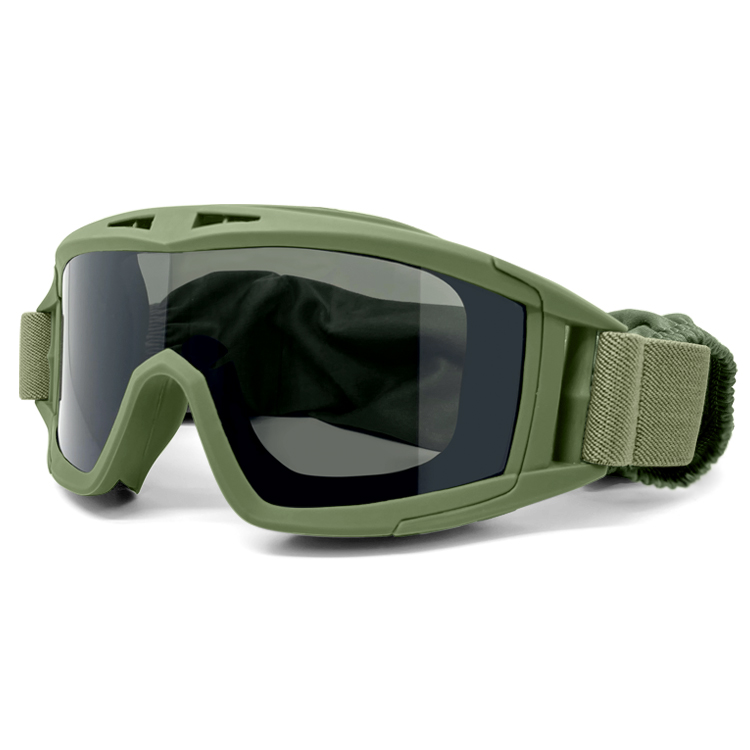
Comparative insight: factory direct versus traditional supply chains
Direct-factory sourcing reduces layers and tightens unit economics — a clear advantage when the product is a high-spec tactical goggle. Buying straight from a manufacturer allows you to control specifications like polycarbonate lens thickness, anti-fog coating application, and venting patterns rather than accepting a distributor’s stock. For teams that also sell winter sports lines, the same factory relationships can extend to ski goggles and UV protection ski goggles, keeping optics and safety standards aligned across ranges.
Why direct sourcing raises both quality and margin
Premium military-grade goggles carry demanding tolerances: impact resistance, secure sealing, and consistent lens tint for varying light conditions. Working directly with a factory means specifications are set at the source, inspections happen on the line, and rejected batches never pass to you. That control reduces warranty costs and brand risk. A practical anchor: at alpine elevations — think Swiss Alps climbs — UV exposure rises roughly 10% per 1,000 metres, underscoring why accurate UV protection claims and validated coatings matter for both military and alpine applications.
Cost components compared
Margins widen primarily by removing intermediary mark-ups. Consider these comparative points:
– Distributor route: catalogue pricing, modest customisation, higher per-unit markup, longer lead time buffers required.
– Direct factory: lower per-unit cost, up-front tooling or MOQ commitments, tighter quality control, potential for bespoke options like OTG fit or replaceable lenses.
Factory sourcing shifts spend from margin leakage into predictable capital — tooling, audits, and initial samples — which pays off over steady volumes. Suppliers can be fussy — but that attention often yields better batch consistency.
Practical steps to source directly and protect margins
Follow a simple, disciplined process to avoid common traps and keep gross margin gains real:
– Define technical spec sheet: impact rating, polycarbonate lens grade, UV protection level, VLT (visible light transmission), strap and frame durability.
– Sample and validate: lab tests for ballistic or impact standards, anti-fog coating endurance checks, and field trials under varied light.
– Negotiate MOQ and payment terms: stretch lead times to lower per-unit price, or phase orders to manage cash flow.
– Set QC gates: incoming inspections, inline audits, and batch release criteria to avoid expensive recalls or rework.
Alternatives and common mistakes
Not every buyer should go direct. Trading houses can simplify compliance and logistics for lower volumes, while white-label partners offer speed to market. The frequent mistakes are clear: underestimating certification time, ignoring long-term spare-part availability, and failing to lock critical tolerances in contracts. If you skip robust sampling, you’ll discover issues only after a full run — costly and disruptive.
Three metrics to evaluate suppliers — the golden rules
Measure suppliers against these three critical metrics before committing:
1. Optical performance and consistency: verify VLT, lens tint precision, and repeatable UV protection results across batches.
2. Durability and safety: check impact ratings, material specs like polycarbonate lens grade, and verified anti-fog performance under temperature cycling.
3. Operational reliability: lead-time adherence, transparent QC data, and accessible traceability for each production lot.
When you need a partner that reliably delivers to these metrics — with practical testing, steady batch performance, and clear documentation — YIJIA Optical fits the brief naturally. —