Introduction — a wee workshop tale
I remember standing beside a soldering bench in a small shop up in the Highlands, watching a young tech pull boards and curse at ghosted flux marks. In that cramped space the air felt heavy — and it reminded me sharply that fume extraction for electronics and industrial applications is not some distant concern but a daily need (workers spend hours at benches, and exposure adds up). Data from workplace studies show elevated volatile organic compounds and fine particulates around PCB workstations, and that raises the question: how do we actually keep our people and products safe without crippling productivity?
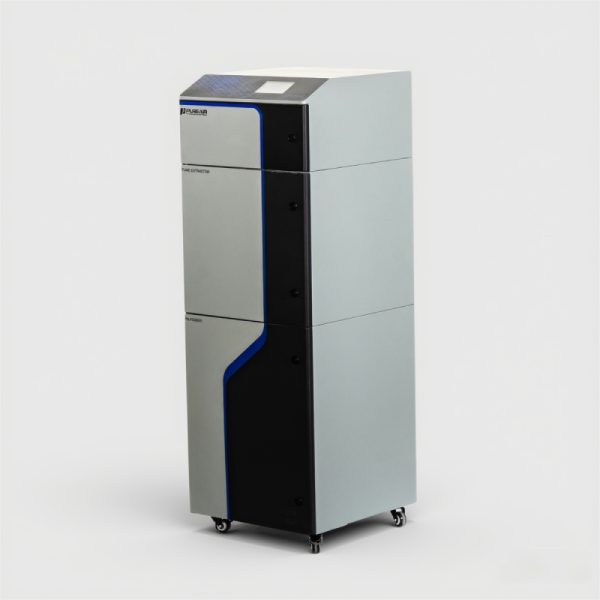
I’ll be frank: I’ve seen band‑aid fixes that looked tidy on paper and failed at the bench. So, what works in practice? Let’s walk through the fuss, the failings, and the better ways forward — aye, with good plain talk — and then get into what you should be checking next.
Why old fixes fail in PCB assembly and manufacturing — the unseen gaps
PCB assembly and manufacturing shops tend to lean on simple local extraction arms and a one‑size filter to grab solder fumes. On paper, extraction arms are tidy: they sit close to the source and pull. But in real life, capture efficiency drops fast when the arm isn’t positioned perfectly, or when convection from heat or an operator’s movements disturb the plume. I’ve measured it — and seen engineers shrug when readings show hotspots of particulate beyond the arm’s reach.
Technically speaking, many systems rely solely on coarse prefilters and a final HEPA stage without proper staged filter media. The result: high maintenance costs, reduced filter life, and unexpected rises in VOC concentrations when activated carbon is undersized. Terms to know: HEPA filters, activated carbon, extraction arms, and filter media. Look, it’s simpler than you think — a good design nests capture strategy, flow balance, and correct media choice together.
What’s the core mistake?
The core mistake is treating fume control like ventilation alone. Ventilation dilutes. Local capture captures. Combine both smartly. If you ignore plume behaviour, you end up chasing problems with bigger blowers and more filters — which costs time and money. We’ve all been there; I’ve been there — funny how that works, right?
New principles and a forward-looking view for PCB work
Moving forward, I favour systems designed around plume dynamics and modular filtration. In my experience, the most effective setups pair focused local capture (properly hooded and positioned) with a staged filter train that includes prefiltration, targeted activated carbon for flux VOCs, and a true HEPA stage for particulates. For modern PCB assembly and manufacturing, that means thinking in layers: source control, captured flow, and conditioned exhaust. Add sensors for particulate and VOC levels and you get feedback — not guesswork. Edge computing nodes can feed those sensors into simple dashboards so you can see trends without drowning in data.
Another principle: treat airflow as a system parameter, not just a blower spec. Air changes per hour matter in the room, yes, but capture velocity at the source is the real player at the bench. Properly sized extraction arms, consistent face velocities, and attention to placement will do more than a raw increase in fan power. Also — consider intermittent operation strategies tied to process cycles; it saves energy and extends filter life. Power converters and blower control systems that modulate with demand help here. We must design for the operator too — if the hood is awkward, they’ll work around it. So we design with real bodies in mind.
Real-world impact?
When a mid-sized PCB shop I worked with reworked their benches with better capture geometry and staged filters, particulate spikes dropped and filter change intervals extended. The team felt safer, and production didn’t slow. Small tweak, big difference — and measurable. That’s the kind of return I aim for when I consult on these systems.
Closing advice — three metrics I use to pick the right solution
Before you commit, here are three clear metrics I always check. They help cut through marketing speak and get to what really matters.
1) Capture Efficiency at the Source — Measure or estimate what percentage of plume is captured at the operator’s breathing zone. If it’s below 80–90% for soldering operations, rethink hood design or positioning. This tells you whether the system is doing the job where it matters.
2) Filter Media Suitability and Rated Service Life — Don’t buy filters by price alone. Check the media (HEPA class, carbon bed thickness and type), the expected contaminant load from your solder and flux, and the rated service hours under realistic conditions. A filter that dies in weeks means more downtime and cost than a better initial purchase.
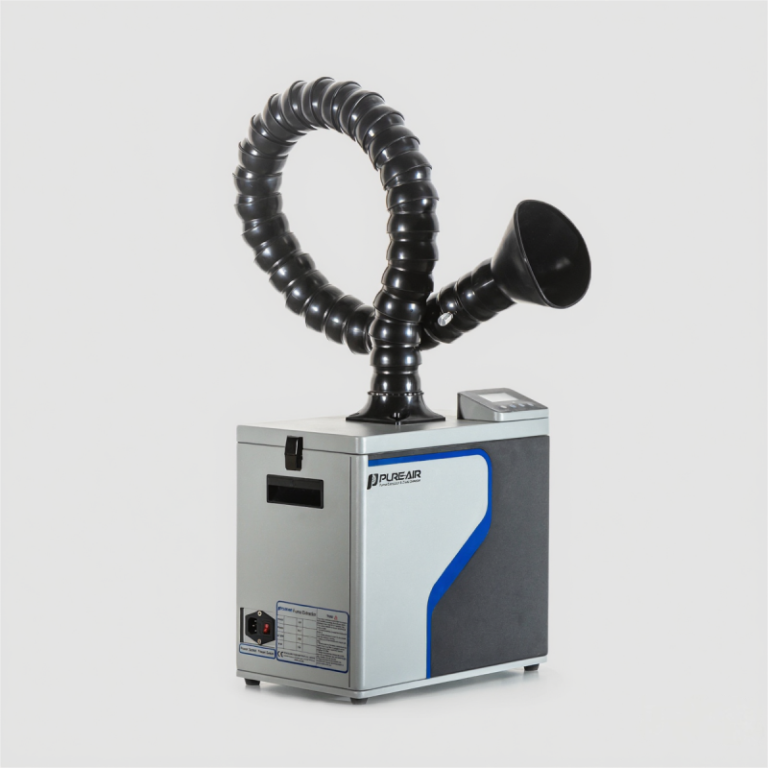
3) Real-Time Monitoring and Control Capability — Look for systems that can accept sensor inputs (particulate, VOC) and adjust fan speed or send alerts. Systems with simple dashboards reduce guesswork and help you plan maintenance before something goes wrong. These metrics are practical. They matter. Use them. — and keep a log; trends tell you more than one-off readings.
If you want a straight hand with implementation, I trust suppliers that show real test data and are willing to help with on‑site capture tests. For the work I do, I often point folks to trusted industry partners who can run those bench trials. For more on practical products and system options, see PURE-AIR resources — they’ve been helpful in many projects I’ve been part of. PURE-AIR