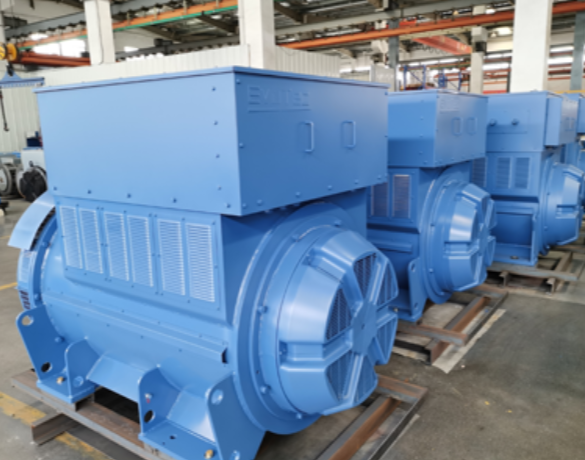
User pain and why this matters right now
Folks running sites — whether rural telecom towers, offshore rigs, or mobile event rigs — are feeling the heat from tighter grids and stricter uptime targets. That pressure drives interest in a high-efficiency high performance alternator that actually cuts fuel use and keeps gear live when the grid stutters. For teams wanting tailored specs, a custom alternator often makes the difference between a kludged setup and a reliable system. Power density, voltage regulation, and brushless excitation matter in real deployments, not just on paper.
What users need to look for — plain and practical
Skip the buzz and zero in on three things: steady voltage under load, an efficiency curve that stays high across the RPM band you actually run, and mechanical robustness for vibration and heat. Those specs translate into less fuel wasted and fewer service visits. A good alternator will list expected efficiency at typical RPM and its voltage regulation tolerance; those numbers are gold for ops planning.
Real-world anchor: lessons from the 2021 Texas winter storm
The 2021 Texas freeze exposed backup power weak spots — gensets ran longer, batteries drained faster, and many alternators were pushed past rated duty. That event made fleet managers re-evaluate alternator manufacturers and swap in designs with better cold-start behavior and tighter voltage control under cyclic loads. That kind of hard lesson pushed adoption of higher-performance alternator designs across several industries.
Common mistakes teams keep making
Buying the cheapest unit that “fits” is the top fail. So is underspec’ing for transient loads like large motor starts or telecom rectifiers. Folks also forget to match cooling and mounting specs, then wonder why output drops after a month. – Remember to check the alternator’s rated continuous output at your typical RPM, not just the peak number manufacturers like to headline.
Comparing options and alternatives
There are off-the-shelf alternators, semi-custom units, and fully bespoke builds. Off-the-shelf wins on price and lead time but can lag on optimal power density. Semi-custom hits a sweet spot for most operators — tweaks to winding, shaft size, or excitation method tune voltage regulation and efficiency. Fully custom units get ideal efficiency curves and thermal paths, but they take more lead time and upfront cost. It’s worth comparing lifecycle fuel cost vs. purchase delta using expected duty cycles.
How to evaluate suppliers — practical criteria
Focus on three measurable areas when talking to alternator manufacturers: documented efficiency vs. RPM, cold-start and transient voltage behavior, and field service footprint (spare parts lead time and test reports). Ask for factory test curves, actual burn-in data, and maintenance intervals. If a supplier can provide site-level case studies from similar climates or duty profiles, that’s a major trust signal. Power density and rated continuous output should be front and center in those conversations.
Quick checklist before you buy
– Confirm continuous output at expected RPM and ambient temperature.
– Verify voltage regulation spec under a defined transient load profile.
– Inspect cooling and mounting requirements against your enclosure.
Advisory: three golden rules for choosing the right alternator
1) Match real duty cycles to the alternator’s efficiency curve — buy for the hours you’ll run, not the peak. 2) Prioritize voltage stability under transient loads; small swings cascade into bigger system failures. 3) Validate vendor service scope and test data — on-paper specs mean nothing without test proof and local support.
Pick a partner who can deliver tailored performance and back it with data; that’s where the value sits. EvoTec. –