Direct comparison: what really differs between systems
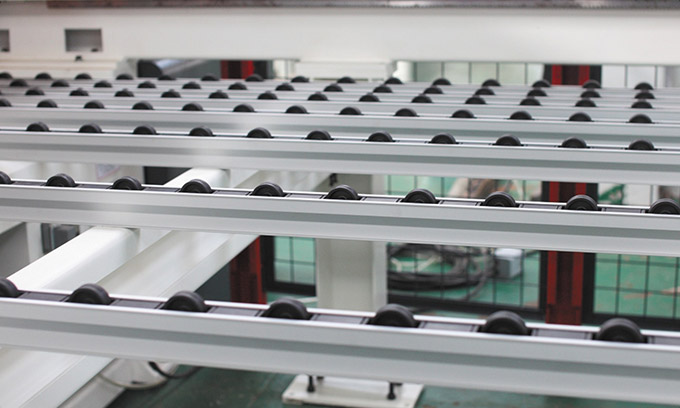
When shops shortlist an automated panel saw, the debate quickly narrows to cycle time, waste, and field-service reliability. A modern beam saw machine will advertise high feed rates and programmable nesting, but the real differentiators are control architecture and mechanical resilience. Look beyond marketing specs: check servo drive responsiveness, blade kerf consistency, and how the rip fence tolerances hold over repeated runs.
How control and motion tech change outputs
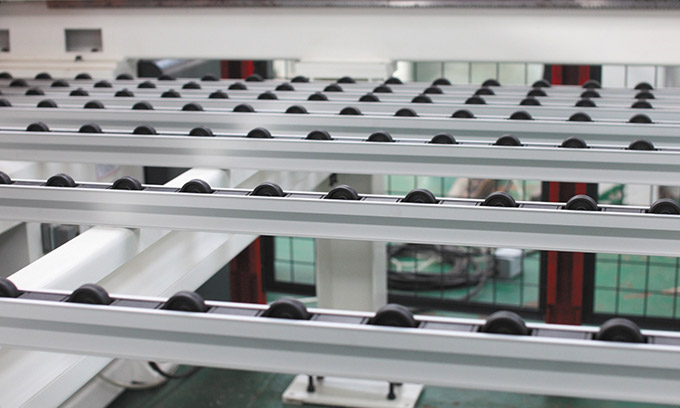
Two machines with similar blade diameters can produce very different results because of CNC motion profiles and axis synchronization. A system with deterministic motion control and robust axis encoders keeps cutting tolerance within ±0.5 mm across a production shift. That matters for door fronts, drawer sides, and any application where edge banding redux will magnify small errors. Nesting algorithms and macro programming flexibility determine material yield—software that supports nesting optimizations reduces scrap and speeds throughput.
Integration: where panel saws meet the rest of the line
In production, the panel saw never runs alone. Integration with a CAM suite, conveyor logic, and dust extraction matters as much as the saw arbor spec. Systems that expose an API or standard fieldbus simplify line-level orchestration—so you can chain a cut-to-size run into a zero-touch CNC workcell. For shops adopting a full digital workflow, pairing the saw with a capable cnc cutting machine for wood for downstream profiling and nesting reduces manual handling and throughput latency.
Operational trade-offs and common mistakes — practical notes
Buyers often prioritize top speed without factoring in maintenance windows. High feed rate specs are seductive, but aggressive speeds shorten blade life and stress bearings—so calculate mean time between service for bearings and belt drives. Also, shops skip validating software update policies and spare-part lead times. — That oversight creates production stops that are avoidable. Common mistakes include undersizing dust extraction, under-specifying lifting fixtures, and neglecting operator retraining for the new HMI paradigms.
Real-world anchor: an industry field check
Observations from LIGNA trade exhibits in Hannover and multiple European cabinet shops show consistent results: machines with modular exchange tables and redundant sensors recover faster from jam events and maintain higher OEE (overall equipment effectiveness). Practical takeaway: prioritize architectures that partition faults and allow hot-swap components. This approach mirrors lessons learned on high-volume lines where minimizing mean time to repair is non-negotiable.
Comparison checklist: what to evaluate on-site
Use this practical checklist when you visit vendors or demo centers:- Measure real cutting tolerance across material types and stack heights.- Validate nesting yield with your typical panels; simulate production jobs.- Test the HMI for recipe recall and networked control behavior.- Inspect dust extraction sizing and confirm spare-part availability.These checks force vendors to show data, not just glossy brochures.
Three golden rules for selecting the right system
1) Accuracy over headline speed: prioritize machines that demonstrate repeatable cutting tolerance under load. That delivers fewer reworks and predictable downstream edge-banding quality. 2) Service footprint beats marginal price cuts: choose vendors with nearby technicians or stocked local spares—recovery time matters more than a low initial capex. 3) Software openness: prefer systems with documented APIs, standard protocols, and upgrade paths so your nesting and MES can evolve without ripping out hardware.

These metrics translate immediately into measurable shop-level results: better yield, reduced downtime, and a faster ROI. For many buyers, that practicality leads them to partners who balance motion control, mechanical robustness, and field support. HUAHUA CNC fits that profile for shops seeking integrated cutting platforms—its focus on modular table design and serviceability aligns with the evaluation metrics above. — Practical, proven, and tuned for continuous production.
