Introduction
A crew huddles at call time, laptops open, clocks ticking. Laser lights skim the rafters like quiet birds finding home. Last season’s show logs tell a sober tale: up to a third of delays came from readdressing fixtures and chasing jitter in cue stacks (thik ache, we have seen this before). What if the rig could help the operator—what if the beam itself carried logic? In other words, what unfolds when the work shifts from console to the head, to a programmable laser light projector that can sense, decide, and adapt?
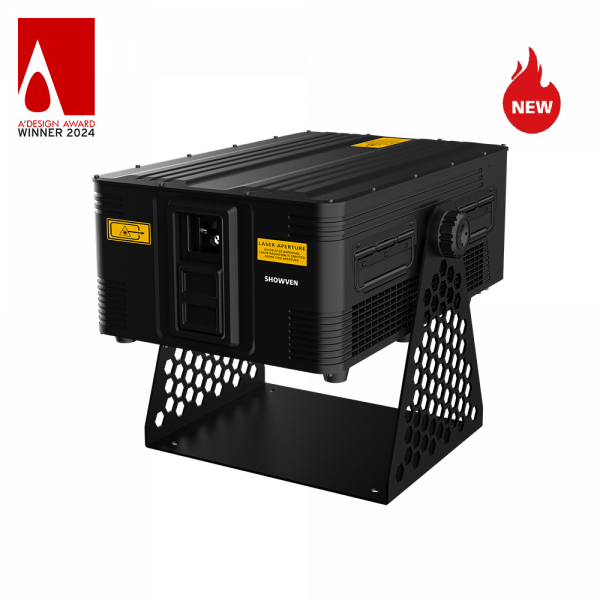
That is the question we unpack here. The promise sounds simple, but the craft is nuanced. Small rooms, big arenas, touring rigs moving twice a week—each has its own constraints. So, can programming at the fixture reduce drift, catch errors earlier, and hold sync under pressure? Let’s take a careful walk, then move toward the future—step by step.
Under the Hood: Where Legacy Rigs Trip—and What Programmability Fixes
Why do fixtures drift out of sync?
Traditional chains lean on long DMX runs, splitters, and patched universes. Address collisions and micro-latency add up. Galvanometer scanners work hard to keep vector frames steady, yet frame drops can appear when modulation frequency and cue density spike at the same moment—funny how that works, right? Safety interlocks step in, do their job, and the audience sees a blink. The operator feels the blame.
With a programmable laser light projector, logic rides inside the head. It buffers cues, maps frames, and validates safety zones locally. Edge computing nodes inside the fixture trim round trips. If a timecode hiccups, the head holds the last good frame rather than falling flat. Beam divergence is recalculated on the fly, so throw distance and haze density can change without tearing the look. Power converters stay inside spec because the head manages burst draw during high-energy chases. Look, it’s simpler than you think: move computation closer to the beam, and you reduce failure surfaces. You also expose clean hooks for OSC, Art-Net, or timecode over IP. In short, fewer weak links; more graceful recovery.
From Control Boxes to Smart Beams: A Comparative, Forward-Looking View
What’s Next
Legacy workflows push everything from a central console. New principles distribute the brain. On-board CPUs cache ILDA frames, apply zone masking, and run auto-alignment routines with tiny MEMS sensors. The fixture learns the stage map once, then refines it over days using lightweight calibration passes. Compared to old-school DMX timing, timecode over IP keeps tighter sync across distant trusses. And because computation is local, latency budgets stay honest. This matters when you stitch lasers to LED pixel maps and pyro cues—one millisecond late is still late.
Consider touring demands. A rig with smart heads can ingest a venue scan at load-in, generate safe zones for balconies, and lock to audio SMPTE without a night-long rewrite. The operator edits macro behavior rather than micromanaging frames. And if you mix lines from different families of laser light show equipment, protocol bridges on the head smooth mismatches between Art-Net, sACN, and custom APIs. Even better, diagnostics get readable: thermal headroom, PSU ripple in the power converters, scanner temperature drift—all reported before they bite. The net effect feels quiet on show night—because trouble moved upstream.
So, how do you choose? Three practical metrics keep decisions grounded. First, recovery behavior under stress: does the fixture hold the last good frame, re-seek timecode, and log the fault? Second, mapping fidelity: can it maintain beam geometry across throw distances with dynamic hazard zones and reliable safety interlocks? Third, integration depth: does it natively support Art-Net/sACN, OSC, and timecode, with edge computing nodes that reduce console load? Evaluate these in rehearsals, not only on spec sheets—then trust the logs. And if the rig makes you breathe easier at 8:05 p.m., that’s your sign—simple, but true.
We have walked from pain points to principles, and then to a near future where fixtures think in light. The craft stays human, the tools get wiser, and the room feels more alive. In the end, a show is still a promise to the audience. Keep it steady, keep it beautiful, and keep it safe. For further study and dependable gear notes, see Showven Laser.