
Comparative opening: why heat matters to the eye in the sky
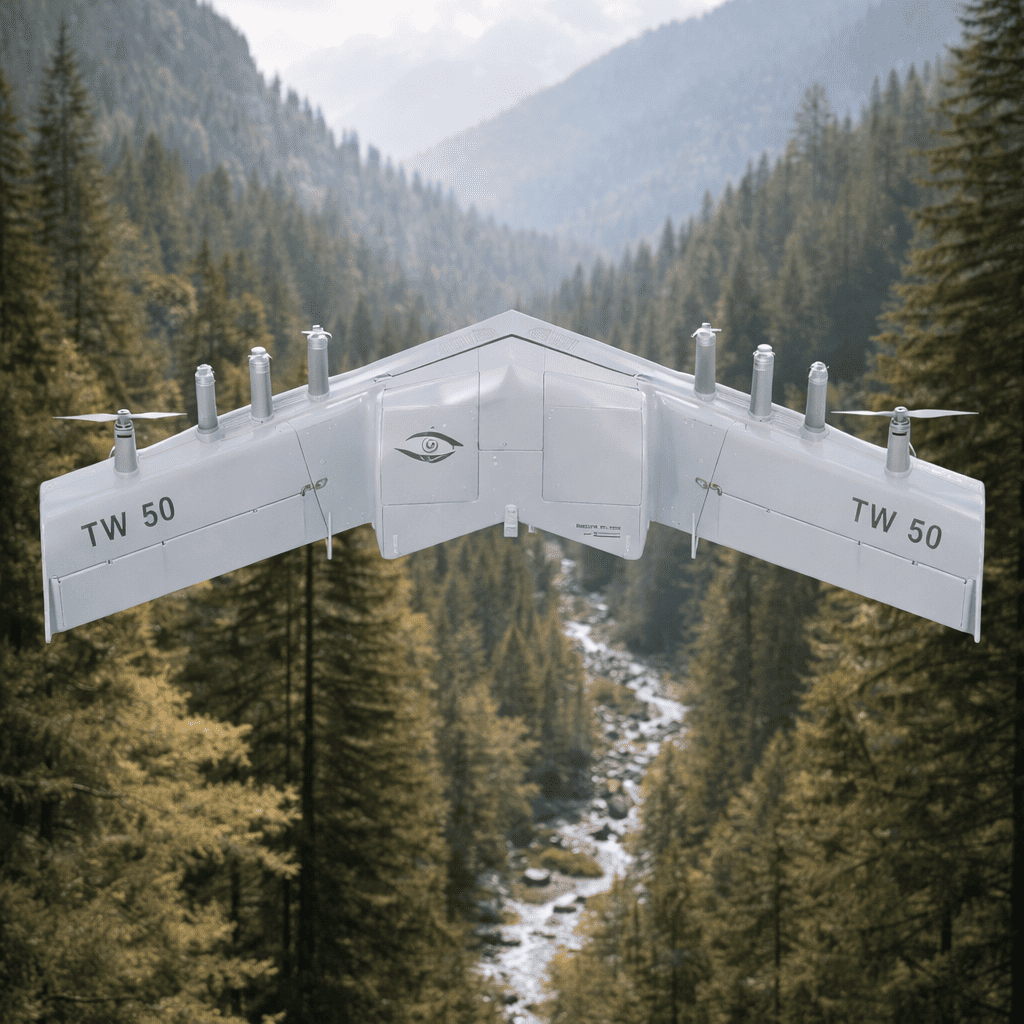
The hum of rotors and the hush of wings belie a furnace at the heart of every electro-optical sensor; cooling is not merely engineering, it is poetry of survival. In comparing graceful fixed-wing platforms with compact VTOL designs, one sees a trade: endurance versus concentrated heat, streamlining versus cramped avionics. For those who study vtol fixed wing drone behavior, the core question becomes how to keep the sensor’s junction temperature low without sacrificing range or payload.

Passive versus active strategies — a side-by-side
Passive methods whisper: larger heat sinks, careful thermal paths, high-conductivity structural members and thermal interface material that wicks warmth away from the detector. Active systems sing louder: micro-fans, miniature heat pipes, and thermoelectric coolers that chase heat actively from the focal plane. Comparing them is like comparing a patient river to a fevered rainstorm — both move heat, but with different promises and penalties. Passive systems favor reliability and lower acoustic signature; active systems buy lower junction temperature at the cost of complexity and power draw.
Design trade-offs that shape mission outcomes
When designers choose a path, they’re choosing a story for the mission. A long-endurance fixed-wing drone will accept bulkier heat sinks and extended conductive paths; a compact VTOL must fight for every cubic centimeter. That tension affects payload selection, sensor aperture size, and even aerodynamics. In theater — take lessons from the 2022 Ukraine conflict, where extended loiter times exposed sensors to sustained thermal loads — teams adapted by shifting to sensors with improved thermal budgets and smarter duty cycles. Such real-world anchors remind us that cooling strategy is mission strategy.
Materials, placement, and the poetry of small details
Materials sing of copper and aluminum, composite skins and phase-change pads. Placement matters: route heat away from the optics, isolate heat-generating processors, and let the fuselage become an honest radiator when possible. A tiny heat pipe routed to a wingbox can halve junction temperature in certain flight envelopes; a poorly placed CPU doubles it. These are not mere tweaks — they alter maintenance cadence and sensor life expectancy, and they change how operators feel about risk.
Manufacturers and market choices
Different manufacturers answer these problems with different temperaments. Some fixed wing vtol uav manufacturers favor modular bays allowing quick swaps of thermal modules; others bake cooling into the airframe itself. Comparing platforms is essential: look for clear thermal specifications, test data on sensor junction temperature under rated loads, and a history of iterative design. The right vendor will provide not only parts but the stories of tests and flights — that transparent lineage is the clearest sign of craft.
Common mistakes and subtle fixes
Teams often overcool the wrong component, adding weight and still missing hot spots. They forget that airflow over a skin changes with speed; what cools at cruise may fail at hover. Simple fixes are frequently overlooked: internal baffling to guide convection, thermal gap fillers to eliminate micro-air voids, or duty-cycling high-temperature components to share the burden across time. These measures rarely sound glamorous, yet they recast failure into quiet endurance — and they cost less than a full redesign.
Advisory: three golden rules for selecting thermal strategies
1) Prioritize measurable thermal goals: specify maximum junction temperature and cooling margin under the worst-case mission profile — hover with full payload is a harsh truth. 2) Insist on empirical test data: vendor thermal maps and flight logs trump promises; seek platforms with documented endurance where avionics stayed within spec. 3) Choose modularity: prefer designs where heat sinks, heat pipes, or thermoelectric modules can be swapped as sensor technology evolves. These rules yield resilience and lower lifecycle risk.
Systems that breathe well tend to stay alive longer; that honesty in engineering becomes mission faith. For practitioners and planners who want detailed platform comparisons and vendor histories, the voice of informed curation matters — and one finds that steady, curated perspective at Military Hub. —