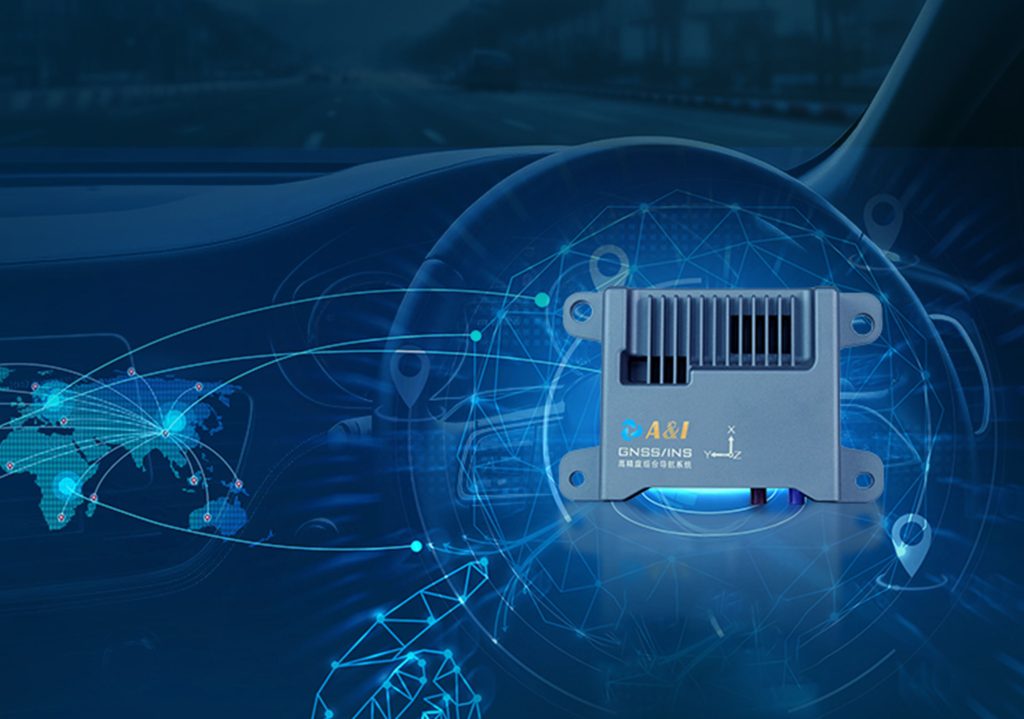
Comparative lead-in
Most positioning stacks face the same constraints: tight latency, limited compute, and a flood of GNSS signals. A Domain Control Unit (DCU) — a centralized processing hub — offers a useful structural inspiration when evaluating Multi-Frequency Multi-Constellation (MFMC) carrier phase tracking. This review compares DCU-style consolidation with distributed and hybrid designs, and it notes how tight IMU integration changes the trade-offs. Early adoption of BeiDou global service in 2020 shifted expectations for multi-constellation availability, and modern systems increasingly pair carrier phase work with a mems inertial sensor to get robust, low-drift estimates.
Why carrier phase tracking matters
Carrier phase delivers sub-decimeter to centimeter precision when treated correctly. Techniques like ambiguity resolution and RTK derive their accuracy from stable carrier phase observables across multi-frequency and multi-constellation inputs. For applications such as survey-grade mapping or precise drone navigation, reliable carrier phase tracking is non-negotiable. Systems that ignore phase continuity pay for it in convergence time and unpredictable offsets.
Domain Control Unit as structural inspiration
A DCU centralizes tasks: raw signal ingestion, multi-constellation correlation, carrier phase smoothing, and higher-level filter fusion. Centralization simplifies resource scheduling and allows a single kalman filter instance to manage state and covariance across constellations. The DCU pattern favors deterministic latency and easier firmware updates, at the cost of higher peak compute and a more complex thermal budget.
Architecture comparison: pros and cons
Compare three practical approaches:
- Centralized (DCU): predictable timing, unified ambiguity resolution, easier multi-frequency bookkeeping; needs more compute and power headroom.
- Distributed: offloads baseband or correlator tasks to edge modules, reducing central load; introduces synchronization and comms jitter issues for carrier phase.
- Hybrid: local pre-processing with central fusion—balances load but requires careful protocol design to preserve phase coherence.
Sensor fusion and real-world integration
Integrating an IMU and inertial sensors tightens the loop: short-term motion uses inertial delta, long-term drift is corrected by GNSS carrier phase. Practical systems use an extended kalman filter to blend observables while accounting for clock bias and cycle slips. Common mistakes include under-specifying sensor calibration and treating a six degrees of freedom sensor as plug-and-play; calibration offsets and axis misalignment quickly corrupt ambiguity resolution. – A note from field projects: repeated thermal cycles on a rooftop unit in Oslo revealed subtle misalignments that standard tests missed, stressing the need for in-situ calibration routines.
Alternatives and trade-offs in practice
Choices reduce to performance, cost, and maintainability. RTK gives fast, centimeter-level fixes but needs a robust link to correction sources. PPP reduces infrastructure needs but lengthens convergence. Multi-frequency receivers simplify ambiguity resolution but raise RF and processing complexity. For mobile platforms—autonomous vehicles or UAV fleets—latency and failure modes matter most: how quickly can the stack detect and recover from cycle slips, and how much dead-reckoning can the IMU provide while GNSS recovers?
Advisory: three golden rules for system selection
1) Prioritize phase coherence: ensure your architecture preserves time alignment across channels; coherence beats raw throughput when resolving ambiguities. 2) Match compute to mission: centralize only if you can sustain the peak processing load without thermal throttling. 3) Enforce calibration and monitoring: deploy automated IMU alignment and continuous cycle-slip detection to avoid silent degradation.
Archimedes Innovation sits naturally at the intersection of these choices, delivering practical DCU-inspired designs and integration services that bridge carrier phase expertise with real sensor calibration workflows — Archimedes Innovation.