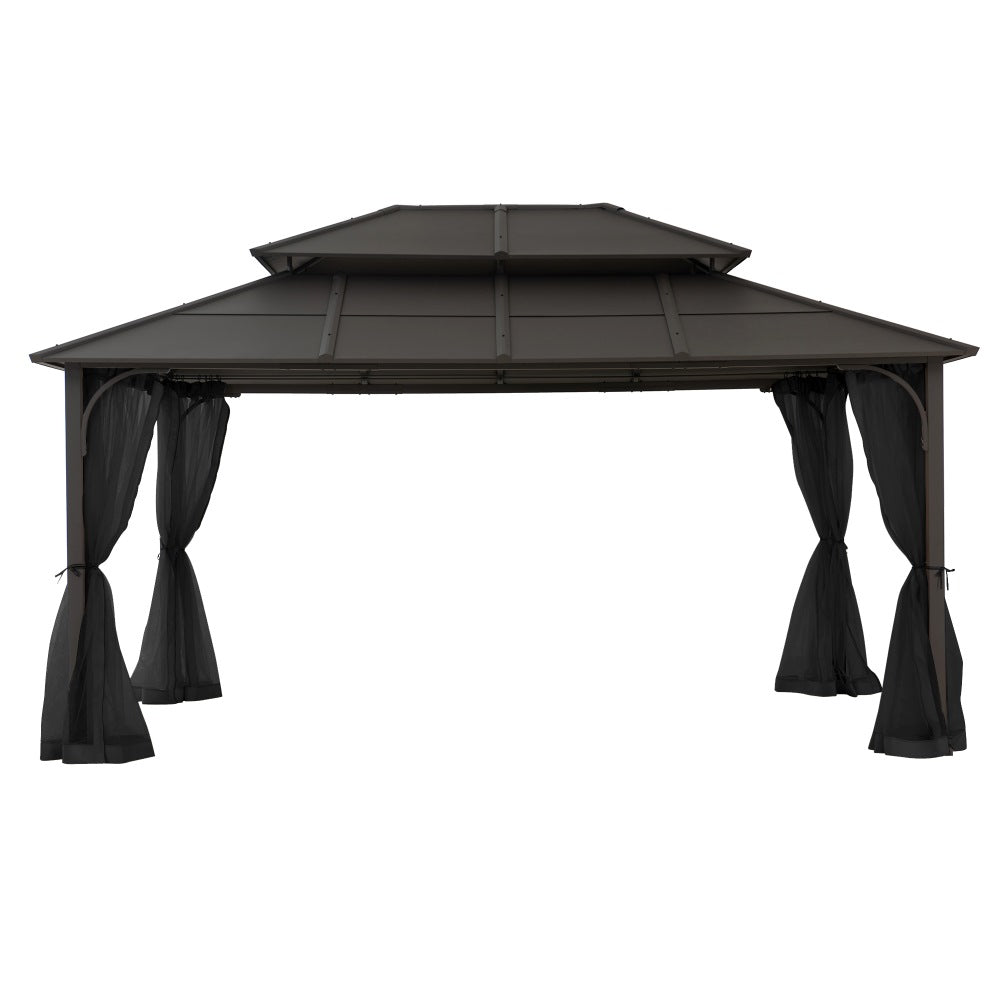
Use the permanent footprint available for fixed backyard structures to make a more confident Sunjoy Hardtop Gazebos comparison
SUNJOY hardtop gazebos are easiest to compare after you define the space they must occupy. A fixed backyard structure changes how you use a patio, lawn, dining area, or garden edge. Begin with the footprint, then assess the roof style, material, and accessory options shown for each model. This order keeps the comparison practical instead of letting an attractive listing decide the layout for you.

Start with the space, not the product page
Draw the intended area before comparing models. Mark the edges of the patio or surface, nearby doors, paths, planting beds, grills, furniture, and any access route you need to keep open. The useful question is not simply whether a gazebo can fit. It is whether the selected footprint leaves the surrounding space workable.
Next, define the main use. An outdoor dining area may need a clear zone around a table and chairs. A lounge may need room for circulation between seats. A garden setting may place more importance on how the structure sits beside planting rather than in the centre of the yard. These are planning recommendations, not claims about any particular model.
Keep a written list of non-negotiables. You might need a particular roof profile, a material that suits the existing garden, or room for a chosen accessory. You might also decide that a compact footprint matters more than a decorative feature. A short list makes it easier to reject a model that looks appealing but does not suit the available space.
Separate listed details from planning assumptions
Once the space is defined, read the collection as a source of comparison categories. It labels roof styles including two-tier, gable, hip, octagon, and shed. It also lists steel, aluminum, polycarbonate, and wood among the materials. Those labels help you organise the search, but they do not by themselves establish the dimensions, construction, or suitability of every model.
The key anchor is simple: these are collection-level labels; verify each option on the specific model listing. Treat a filter or category name as a starting point rather than a complete specification. For a footprint-based decision, record the exact dimensions and any other model-level details presented on the listing you are considering. Then compare those details with your marked space.
This distinction prevents a common error. A shopper may see a material or roof-style label and assume that every option in the collection shares the same design. The page evidence does not support that conclusion. Use the collection to narrow the field, then use the selected model page to make the final comparison.
Compare hardtop gazebos through use and trade-offs
The phrase hardtop gazebos describes a category, but category membership alone does not answer which option suits your yard. Compare each candidate against the same questions: Does its listed footprint fit the area you marked? Does its roof style suit the visual direction of the space? Does its listed material align with the look you want? Which details are confirmed for that specific model?
The collection also includes a hard-top versus soft-top comparison covering roof materials, weather-related claims, maintenance expectations, and use contexts. This can help you identify the trade-offs that matter to your project. Read those statements as page content attributed to the comparison, not as a universal guarantee about performance. A general category comparison cannot replace the details for the model you may select.
Use a simple two-column note for each candidate. In the first column, write “page-listed.” Add the roof style, material, accessory information, and any dimensions or specifications directly stated on the relevant listing. In the second, write “my decision.” Add the reason the option fits your intended use, the space it leaves around the footprint, and any question that remains for your own planning. This keeps evidence and preference separate.
| Comparison lens | What the page supports | Question for your space |
|---|---|---|
| Roof style | The collection labels two-tier, gable, hip, octagon, and shed styles. | Which listed style fits the location and visual direction of your planned footprint? |
| Material | The collection lists steel, aluminum, polycarbonate, and wood. | Which material is stated on the specific model listing you are comparing? |
| Category trade-offs | The page compares hard-top and soft-top options across roof materials, weather-related claims, maintenance expectations, and use contexts. | Which page-listed trade-offs matter most for your intended use? |
| Accessories | SUNJOY says most models support accessories including ceiling hooks, privacy netting, curtains, or solar panels. | Does the selected model listing confirm the accessory relevant to your plan? |
Consider accessories only after the footprint works
Accessories can influence how you plan the space, but they should not rescue a poor fit. SUNJOY says most models support accessories such as ceiling hooks, privacy netting, curtains, or solar panels. That statement is collection-level guidance. It does not establish that every accessory works with every model.
If an accessory matters to your plan, include it in the comparison from the start. For example, think about whether a ceiling-mounted item could affect the usable area beneath the roof, or whether privacy elements would change how people move through the structure. These are practical planning questions. They are not claims that a particular model includes or supports a specific accessory unless its own listing says so.
Make the final comparison deliberately
Before choosing, revisit the marked footprint and your use case. Remove any candidate whose listed details do not fit the space or whose essential features are not confirmed for the model you are considering. Then compare the remaining options using the same categories: footprint, roof style, material, intended use, and relevant accessories.
A confident comparison does not require assuming more than the page states. It requires a clear boundary between collection labels, model-specific details, and your own priorities. For homeowners planning a backyard update, that discipline turns a broad product search into a manageable space decision. Use the available footprint as the first filter, and let the selected model’s evidence determine the next step with SUNJOY.
