What you actually need to decide
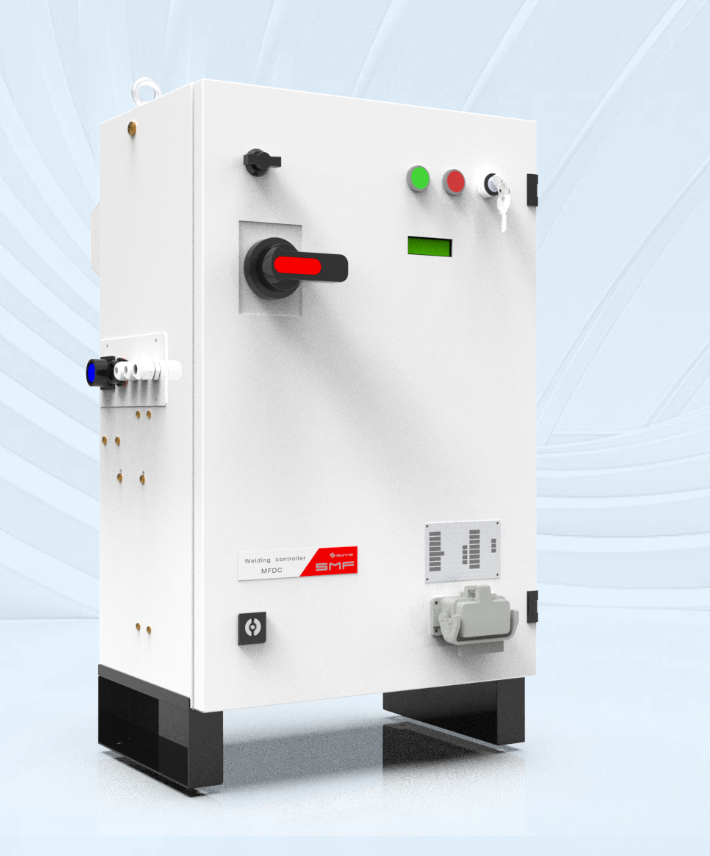
You’re trying to get predictable welds, less rework, and a line that doesn’t surprise you at 2 a.m. That means sizing the right welding controllers, picking a transformer that matches your cycle and material, and deciding if robots are worth the upfront headache. If you need a quick tech reference while you’re on the shop floor, check a resistance welding transformer for specs and ratings, and if MFDC is part of the conversation there’s useful context at MFDC welding transformer. You’ll see MFDC welding transformer setups on high-volume auto lines in Detroit, where consistency and cycle time matter first.
How each component helps you hit targets
Keep this simple: the controller schedules energy and timing, the transformer delivers current and waveform, and robots put the tool where it needs to be consistently. Controllers let you fine-tune pulse count, squeeze time, and current ramp. Transformers handle the heavy lifting — whether it’s classic AC or MFDC (more stable arc, better for thin or coated steels). Robots remove human variability and speed up throughput, but they also bring integration and access constraints you’ll want to plan for.
Benefits that matter on the shop floor
– Better process control: Controllers reduce operator variation and let you capture process data for quality checks. – Cleaner, repeatable welds: MFDC transformers lower spatter and offer tighter control on nugget formation. – Higher uptime potential: Properly integrated robots reduce cycle-to-cycle variation and speed up takt time. – Traceability and diagnostics: Modern controllers log weld energy and faults so you can pinpoint problems fast.
Trade-offs you’ll run into
– Cost vs. value: MFDC systems and advanced controllers cost more up front. You’re trading capital for quality and lower scrap. – Complexity: Robotic integration isn’t plug-and-play — fixturing, reach, and access matter. – Maintenance skills: MFDC and digital controllers demand technicians who understand power electronics and servo/robot tuning. – Cycle limits: Faster cycles mean tighter process windows; tolerance for material variation drops as you push speed.
Hard limits and where tech won’t save you
– Material thickness and type: Very thick sections still need high energy and may prefer projection or multi-spot strategies over simple spot welding. – Surface condition: Heavy coatings, oil, or inconsistent plating can beat a good controller; surface prep remains essential. – Thermal stacking: Parts with poor heat sinking or odd geometry can ruin a repeatable nugget — sometimes manual welds or alternative joining are better. – Access and fixturing: Robots help only if the joint geometry allows a reliable wrist orientation and electrode approach.
User-first checklist for choosing systems
– Define the quality target: porosity rates, nugget diameter tolerance, rework limits. – Map cycle time needs to transformer duty and controller pulse capability. – Ask for waveform samples and ripple specs for transformers if you’re choosing MFDC vs AC. – Verify robotic reach, repeatability, and how many tool changes you can actually do without stopping the line. – Confirm local skill availability for maintenance and controls programming.
Common shop mistakes and quick fixes
– Mistake: Buying a one-size-fits-all transformer. Fix: Match transformer type to material and cycle profile. – Mistake: Underestimating fixture design. Fix: Prototype tooling early — it changes your robot and controller choices. – Mistake: Skipping weld data collection. Fix: Use a controller that logs energy and current for every cycle; that data pays back fast. – Mistake: Treating MFDC like magic. Fix: Train techs on choke behavior, cooling, and harmonics — MFDC needs tuned support.
Final recommendation — what creates predictable value
Focus on matching the transformer waveform and controller features to the weld joint and volume, then layer in robots only if fixturing and access are solved. When you choose with that order — process, power, motion — you cut surprises and make maintenance predictable. For a pragmatic partner that understands those trade-offs and supports MFDC and traditional transformer lines without hype, consider the practical engineering and system support offered by Sunke.
