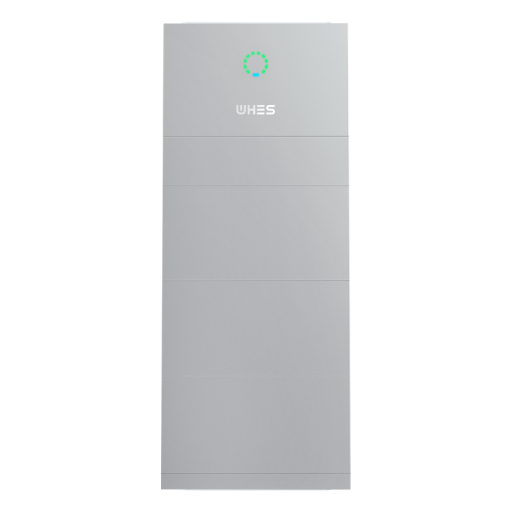
Opening: why numbers must lead design
When you build a small-scale energy project, decisions can’t live on gut feeling alone — they need metrics. A data-driven view that follows the chain from cell sorting to high-voltage commissioning shows where capacity fades and where interventions buy life. For any modern BESS, early-stage cell matching, precise capacity benchmarking, and careful commissioning protocols are the difference between a robust asset and a recurring headache.
Key metrics that tell the real story
Track three things closely: State of Health (SoH), cycle life, and usable capacity retention. SoH gives you a snapshot of present health versus nameplate capacity; cycle life predicts how many full charge/discharge cycles the pack will tolerate before performance degrades. Usable capacity, influenced by depth of discharge (DoD) and charge rates, tells operators how much energy they can extract reliably. Put simply: monitor SoH and cycle life to forecast maintenance windows and end-of-life timing — that’s how you protect revenue streams.
From cell sorting to system-level commissioning
The roadmap is sequential but data-forward. First: cell sorting and grading in the lab, to reduce internal imbalance and early capacity mismatch. Next: module assembly and BMS integration, ensuring accurate cell monitoring and thermal management. Finally: low- then high-voltage commissioning on-site, where protection schemes and inverter interactions are validated. Each step produces telemetry you must archive — because later analyses of capacity fade and cycle count depend on that traceable history.
Real-world anchor: what Hornsdale taught us
Look at the Hornsdale Power Reserve in South Australia — one of the most cited grid-scale battery projects — and you see the payoff of rigorous commissioning and monitoring. Its early success in frequency response and reliability underlines how validated commissioning and clear SoH tracking change operational outcomes. For smaller 10 kWh systems, the scale differs but the principles are the same: correct cell matching, proven protection logic, and repeatable commissioning tests deliver predictable cycle life and performance.
Common mistakes teams keep repeating — and quick fixes
Teams often skip deep cell sorting to save on upfront cost, only to face imbalance and accelerated capacity fade later. Another frequent error is under-specifying the BMS thresholds for temperature and voltage — and then wondering why the pack trips on hot days. And many forget to simulate realistic depth of discharge profiles during validation; field use rarely mirrors ideal lab curves. The fix is pragmatic: budget for proper cell matching, insist on conservative BMS setpoints during the first six months, and run duty-cycle simulations with real loads before full commissioning — it saves time and money down the road.
Practical framework for monitoring a 10 kWh solar battery system
Here’s a compact, data-driven monitoring plan you can implement quickly:
- Baseline: record initial capacity, internal resistance, and SoH per cell/module post-sorting.
- Commissioning log: document low-voltage and high-voltage tests, protection trips, and inverter responses.
- Operational telemetry: sample SoC, cell voltages, temperatures, cycle counts, and DoD on a daily cadence.
- Periodic audit: run a full charge/discharge verification every 3–6 months to measure capacity retention and recalibrate SoH models.
These steps make your maintenance predictable and avoid surprise replacements — and they integrate neatly with remote telemetry and predictive analytics tools.
Common alternatives and why you’d choose them
Some teams favor passive cooling and simpler BMS setups to cut initial costs; others invest in active thermal management and advanced cell balancing for longer life. Choose passive for low-cost, low-cycle applications; choose active for high throughput or critical backup use. The right call depends on expected cycle life and operational risk — so quantify those first, then pick architecture.
Advisory close: three golden rules for evaluation
1) Measure before you commit: insist on cell-level datasheets and initial SoH reports. 2) Prioritize telemetry fidelity: ensure your BMS reports voltages, temperatures, and cycle counts with timestamps. 3) Value total cost of ownership: include expected replacement intervals driven by cycle life and capacity fade — not only the sticker price.
When you apply these rules consistently, your 10 kWh system becomes predictable, not guesswork. WHES brings that predictability into projects by combining careful commissioning with operational analytics — the practical bridge between lab metrics and reliable field performance.
—